
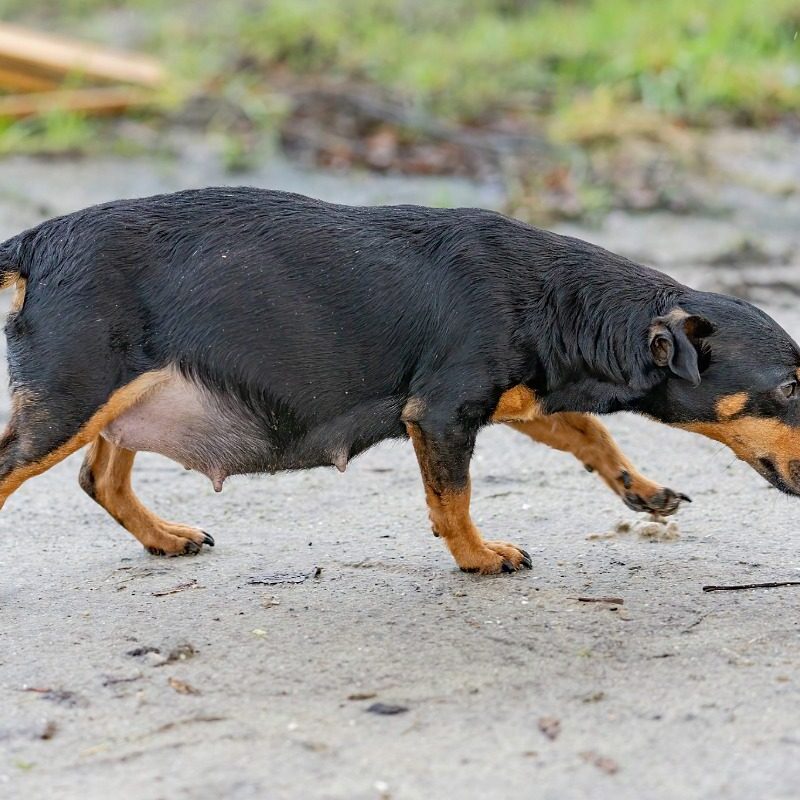
A cesarean section (C-section) is a major surgery used to deliver puppies when a natural birth (whelping) is too dangerous or physically impossible. It may be planned (elective) or performed as an emergency.
When is a C-Section Needed?
Veterinarians recommend C-sections when dystocia (difficult birth) occurs or is highly likely.
Emergency Indicators:
- Prolonged Labor: Active, strong contractions for more than 30–60 minutes without a puppy being born.
- Weak Labor: Weak or irregular contractions for more than 2 hours without progress.
- Time Gaps: More than 2–4 hours between puppies with no active labor.
- Abnormal Discharge: Green or black discharge before any puppies are born, which can indicate placental separation.
- Maternal Distress: Extreme fatigue, vomiting, fever over 103°F, or signs of shock (pale gums).
- Physical Obstruction: A puppy is stuck in the birth canal or is too large to pass through.
Elective (Planned) Reasons:
- High-Risk Breeds: Brachycephalic breeds (Bulldogs, French Bulldogs, Boston Terriers) often have heads too large for the mother’s pelvis.
- Small Litters: Single-puppy litters may not produce enough hormones to trigger natural labor.
- Medical History: Previous difficult deliveries or pelvic injuries.
Post-Operative Care
Recovery involves managing the mother’s healing while ensuring the puppies thrive.
For the Mother:
- Monitoring Anesthesia: She may be groggy or wobbly for 2 to 12 hours. Do not leave her alone with puppies until she is fully alert to prevent her from accidentally rolling on them.
- Incision Care: Inspect the wound twice daily for redness, swelling, or discharge. Prevent her from licking the area, using an e-collar if necessary. Stitches are usually removed in 10–14 days.
- Pain & Meds: Administer only vet-prescribed pain relief. Never give human medications like Aspirin or Tylenol, as they can be toxic or pass through milk to puppies.
- Nutrition: Offer small, frequent meals of high-quality puppy food (which provides extra calories for nursing).
- Normal Discharge: A bloody vaginal discharge is normal for up to a week; if it lasts longer or smells foul, contact your vet.
For the Puppies:
- Supervised Nursing: Guide puppies to the teats every 1–2 hours. The mother’s maternal instincts may take 24–48 hours to fully kick in after surgery.
- Heat Support: Newborns cannot regulate their own temperature. Keep their area between 85°F–90°F if they are not directly against the mother.
- Elimination: If the mother isn’t grooming them, you must gently rub their “bottoms” with a warm, damp cloth after every feeding to stimulate them to urinate and defecate.
Contact your vet immediately if the mother’s temperature exceeds 104°F, if she stops eating, or if puppies are constantly crying and not gaining weight.
Recent Posts
About Us
Knox Veterinary Surgery provides advanced orthopedic, soft tissue, and exotic pet surgeries right in your practice, making care easier for you and your clients. Serving Tennessee and surrounding states, we deliver skilled, compassionate care in a familiar setting.