
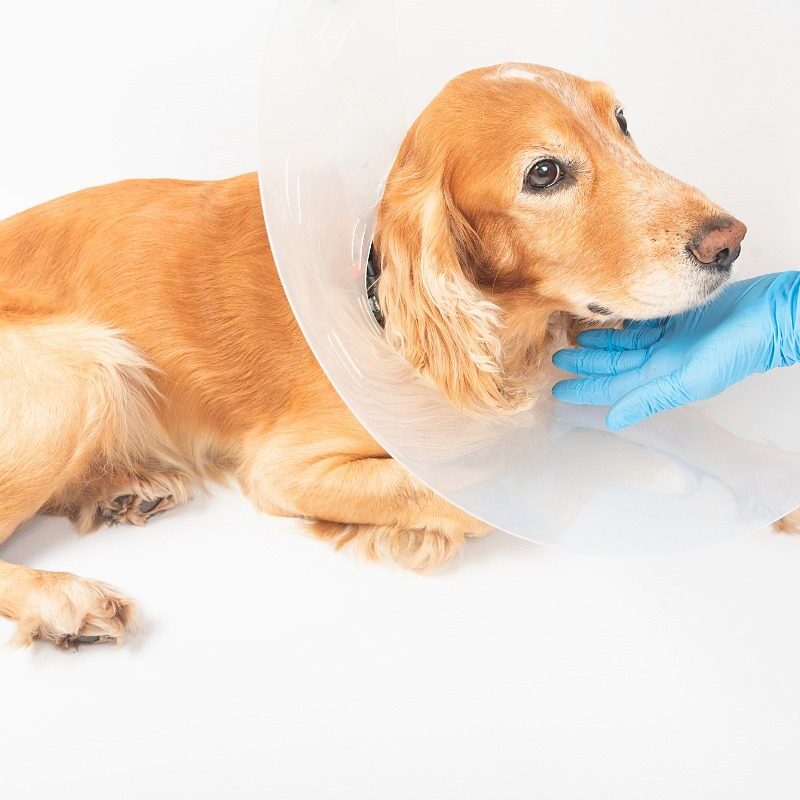
An inguinal hernia occurs when organs or tissues (such as fat, intestines, the bladder, or the uterus) protrude through a weak spot or opening in the inguinal ring, located in the groin area where the hind leg meets the body.
Causes & Risk Factors
Hernias are generally classified into two categories:
- Congenital: Some pets are born with a defect where the inguinal ring fails to close properly. This is more common in young, male, small-breed dogs like Pekingese, Poodles, and Dachshunds.
- Acquired: These develop later in life due to trauma (e.g., car accidents), obesity, or age-related muscle weakness.
- Hormonal/Physical Strain: Middle-aged, intact (unspayed) female dogs are at higher risk because estrogen can weaken connective tissue. Pregnancy also adds pressure to the abdominal wall, increasing the likelihood of a hernia.
Surgical Treatment
Surgery is the only effective treatment and is often recommended immediately to prevent strangulation, a life-threatening complication where the blood supply to trapped organs is cut off.
- The Procedure: Under general anesthesia, the surgeon relocates the protruding tissues back into the abdomen. They then sew the hernia ring closed with stitches or, in cases of very large defects, a synthetic surgical mesh to reinforce the area.
- Spaying/Neutering: Veterinarians often recommend spaying or neutering at the same time to reduce hormonal risks and prevent the hereditary condition from being passed on.
Post-Operative Care
Recovery typically takes 10 to 14 days. Key steps include:
- Activity Restriction: This is critical. No running, jumping, playing, or off-leash activity. Use a crate or a small, gated room for confinement.
- Incision Protection: Your pet must wear Pet Pjs® at all times to prevent licking or chewing, which can cause infection or the incision to open.
- Monitoring: Check the site daily for redness, excessive swelling, discharge, or foul odors.
- Medication: Administer all prescribed pain relief and anti-inflammatories exactly as directed by your Veterinary Clinic.
- Hygiene: Keep the area clean and dry. Do not bathe your pet or allow the incision to get wet until your vet gives the okay.
Recent Posts
About Us
Knox Veterinary Surgery provides advanced orthopedic, soft tissue, and exotic pet surgeries right in your practice, making care easier for you and your clients. Serving Tennessee and surrounding states, we deliver skilled, compassionate care in a familiar setting.