
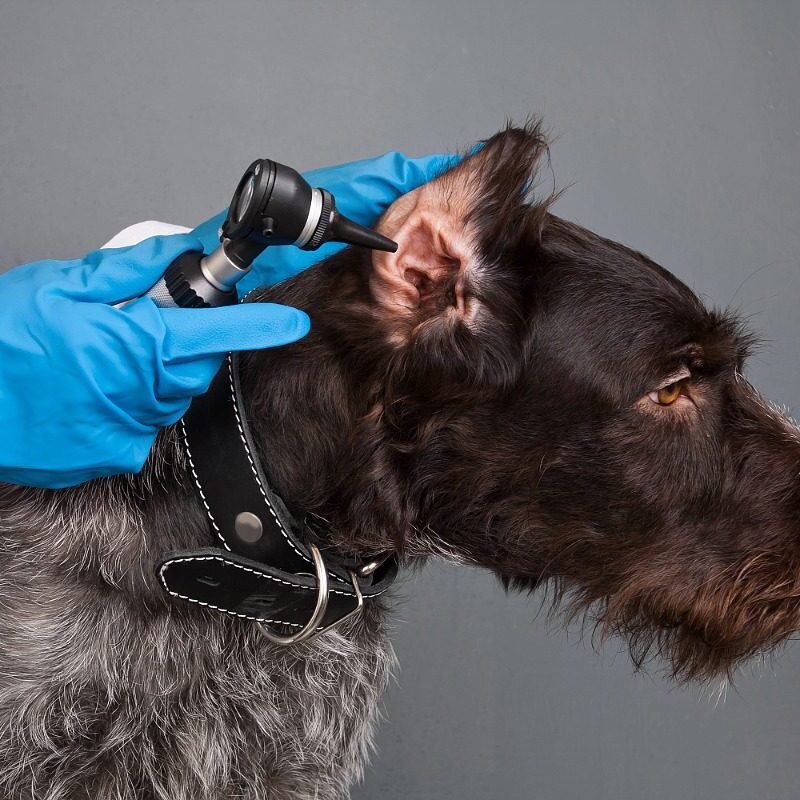
Total Ear Canal Ablation (TECA) is a major surgical procedure where the entire ear canal is removed to resolve severe, irreversible ear disease. It is often performed alongside a Lateral Bulla Osteotomy (LBO), which involves opening and cleaning the middle ear (the bulla) to remove trapped infection and debris.
Indications for Surgery
Veterinarians typically recommend TECA only when medical treatments can no longer manage the condition. Common reasons include:
- End-Stage Chronic Ear Infections: Long-term inflammation that has caused the ear canal to become permanently narrowed (stenosis), scarred, or mineralized (turned to bone).
- Ear Canal Tumors: Both benign and malignant growths within the canal that cannot be removed through less invasive means.
- Middle Ear Infections (Otitis Media): Severe infections deep in the bulla that are resistant to antibiotics.
- Severe Trauma: Physical damage to the ear canal that is beyond repair.
Potential Complications
While TECA has a high success rate (up to 93% resolution of signs), it is a complex surgery with several risks:
- Facial Nerve Damage: The nerve controlling facial movement runs close to the ear canal. Damage can cause temporary or permanent inability to blink, a droopy lip, or a “slack” face.
- Hearing Loss: Because the canal and eardrum are removed, hearing is significantly reduced in that ear. However, many pets already have diminished hearing before surgery.
- Horner’s Syndrome: Nerve irritation that causes a droopy eyelid, small pupil, and a visible third eyelid (more common in cats).
- Vestibular Signs: Inner ear irritation leading to a head tilt, circling, or loss of balance.
- Late-Stage Drainage: In 5–10% of cases, deep-seated infection or remaining debris can cause a draining tract or abscess months or years later, potentially requiring a follow-up procedure.
Post-Operative Care
Recovery usually takes 2 to 4 weeks. Key care steps include:
- Medication: Pet owners must finish all prescribed antibiotics (often for 2–4 weeks) and pain medications.
- Protection: Your pet must wear an Elizabethan collar (cone) at all times to prevent scratching or pawing at the incision, which can cause the wound to open.
- Activity Restriction: Limit exercise to short, leashed walks only. Avoid running, jumping, or rough play for at least 2 weeks.
- Incision Monitoring: Check the site daily for excessive redness, swelling, or foul-smelling discharge. Some surgeons recommend cold or warm compresses to manage minor swelling.
- Eye Care: If your pet cannot blink due to facial nerve irritation, you may need to apply prescribed eye lubricants several times daily to prevent corneal ulcers.
Preparing for a TECA recovery is all about preventing accidental injury and keeping your dog calm while they navigate their “new normal” of reduced hearing and potential balance issues.
- Set Up a “Recovery Suite”
Your dog needs a confined, quiet area to prevent jumping or running.
- The Space: Use a large crate or an exercise pen in a low-traffic room.
- Non-Slip Flooring: Balance can be wonky post-surgery. Cover slick floors with yoga mats or area rugs to prevent slipping.
- Low-Profile Bedding: Use a supportive orthopedic bed that is easy to step onto—avoid high-sided “bolster” beds that require a big step up.
- Manage the “Cone of Shame”
The Elizabethan collar (E-collar) is non-negotiable to protect the incision.
- Clear the Path: Move side tables, floor lamps, or low plants that the cone might bump into.
- Raised Bowls: Use an Elevated Feeder so your dog doesn’t have to navigate the floor with their cone while eating or drinking.
- Soft Alternatives: Sometimes a soft-sided E-collar or a donut collar is safe, as these are much quieter and less stressful for a dog with sensitive ears, if available.
- Sensory Adjustments
Since your dog’s hearing will be significantly reduced, they may be easily startled.
- Visual Cues: Practice using hand signals for basic commands like “sit” or “stay” before surgery.
- Vibration Alerts: When approaching your dog, tap the floor or a nearby wall so they feel you coming rather than being surprised by a touch.
- Night Lights: If their balance is affected (vestibular issues), keep the recovery area well-lit at night to help them stay oriented.
- Safety Essentials
- The Harness: Switch from a neck collar to a Front-Clip Harness to ensure no pressure is put on the neck incision during potty breaks.
- Blocking Stairs: Use Baby Gates to block all stairs. Even a small stumble can pull stitches.
- Hygiene Kit: Keep a stash of baby wipes (unscented) and clean towels near the door to keep the neck area clean and dry without submerging the incision in water.
Recent Posts
About Us
Knox Veterinary Surgery provides advanced orthopedic, soft tissue, and exotic pet surgeries right in your practice, making care easier for you and your clients. Serving Tennessee and surrounding states, we deliver skilled, compassionate care in a familiar setting.