
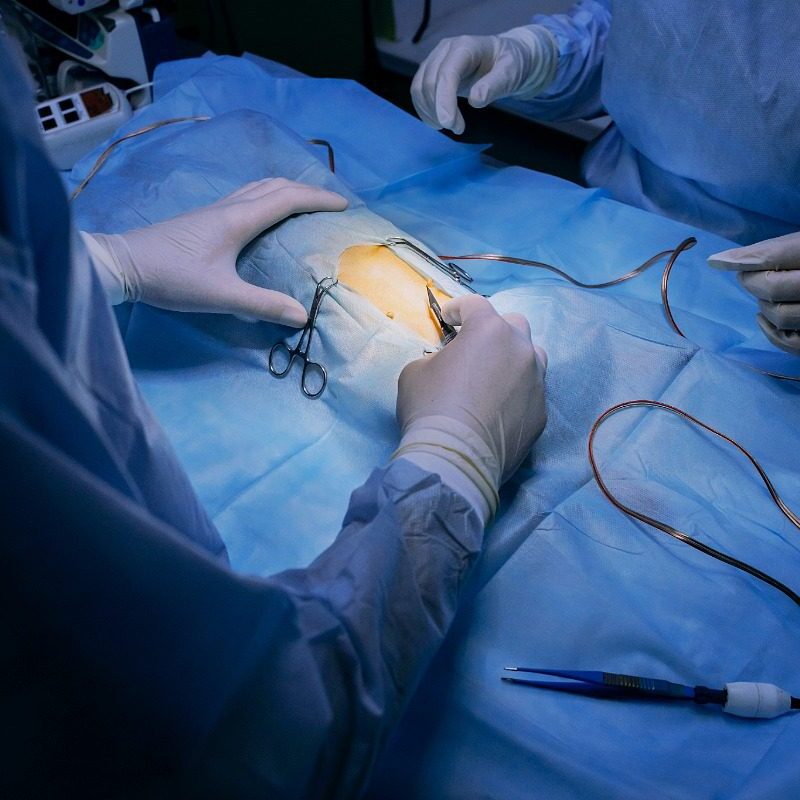
An exploratory laparotomy is a surgical procedure where a veterinarian makes an incision in the abdominal wall to directly examine the internal organs. It is often a critical diagnostic tool used when non-invasive tests like X-rays or ultrasounds do not provide clear answers.
When Is It Indicated?
Veterinarians typically recommend this surgery when a pet exhibits serious, unexplained symptoms or needs emergency intervention:
- Persistent Symptoms: Chronic vomiting, diarrhea, or unexplained weight loss.
- Abdominal Issues: Severe pain, bloating, or fluid accumulation.
- Suspected Obstructions: Ingestion of a foreign body (e.g., toys, socks) that may be causing a blockage.
- Organ Evaluation: Suspected internal bleeding, tumors, or damage to organs like the liver, spleen, or kidneys.
- Biopsies: Whenever multiple organ biopsies are indicated to help with diagnosis, an exploratory laparotomy may be indicated.
Risks and Complications
While common and often life-saving, laparotomies carry inherent risks:
- General Anesthesia: Reactions to sedative drugs, which are minimized through pre-surgical blood work.
- Surgical Risks: Potential for internal bleeding or infection.
- Wound Issues: Dehiscence (the surgical site opening up) or hernias.
- Peritonitis: A serious internal infection that can occur if the intestines leak after a biopsy or foreign body removal.
Post-Operative Care
Recovery generally takes 10 to 14 days, during which strict adherence to aftercare is essential:
- Activity Restriction: Prevent jumping, running, or playing. Dogs should be walked only on a leash for short bathroom breaks.
- Incision Monitoring: Check the site twice daily for excessive redness, swelling, or discharge.
- Protective Gear: Use Pet Pjs® at all times to prevent your pet from licking the wound.
- Dietary Adjustments: Offer small, bland meals (like boiled chicken and rice) or specific therapeutic diets as directed by your vet, especially if the surgery involved the digestive tract.
- Medication: Complete all prescribed pain relief and antibiotics exactly as scheduled.
Recent Posts
About Us
Knox Veterinary Surgery provides advanced orthopedic, soft tissue, and exotic pet surgeries right in your practice, making care easier for you and your clients. Serving Tennessee and surrounding states, we deliver skilled, compassionate care in a familiar setting.